
Early monitoring of patients treated with Romosozumab
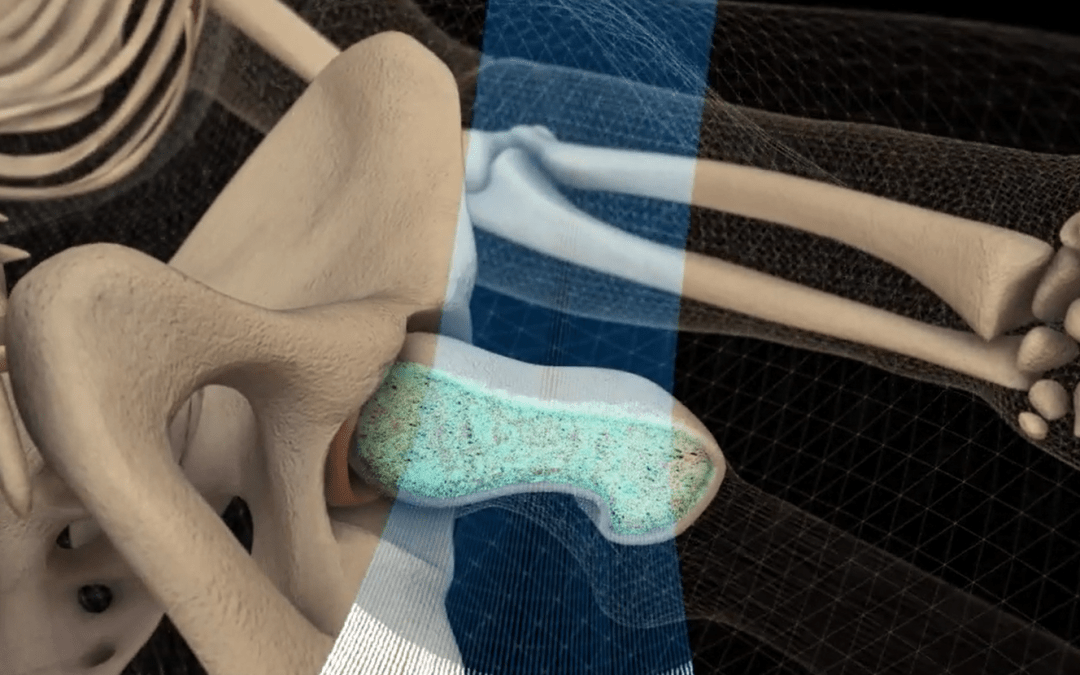
The study “Very short-term monitoring of Romosozumab longitudinal effects in a cohort of postmenopausal women by means of Radiofrequency Echographic Multi-Spectrometry (REMS) technology“, just published on Aging Clinical and Experimental Research (ACER) journal By Semeraro and colleagues, assessed for the first time the effectiveness of the Radiofrequency Echographic Multi Spectrometry (REMS) for very short-term monitoring of Romosozumab (RMZ) in postmenopausal women after only 6 months of treatment.
As we already know, Romosozumab/AMG785 (Evenity®, Amgen and UCB pharma) is a sclerostin-neutralizing antibody that rapidly increases BMD, but very short-term monitoring in clinical routine is limited by specific issues of available ionizing techniques.
Seventy-four postmenopausal women who underwent non-ionizing REMS scans of the proximal femur at baseline and after 6 months of RMZ treatment were included in this study. Exploratory analyses were also performed in treatment-naïve patients and in women with ≥2 previous fragility fractures.
After six months of RMZ, BMD significantly increased at both Total Hip (+3.7%; p < 0.01) and Femoral Neck (+4.1%; ≤ 0.01). In treatment-naïve patients, BMD gains were larger (Total Hip +4.7%; Femoral Neck +4.6%), as also in women with ≥2 prior fractures, where Total Hip BMD increased by 4.1% and Femoral Neck BMD by 4.8% confirming the literature-available DXA-based results. In untreated controls, no significant changes were observed at either Total Hip (-0.8%; p > 0.05) or Femoral Neck (-0.6%; p > 0.05).
The findings support the feasibility of REMS for very short-term follow-up in real-world settings. The possibility of performing frequent radiation-free assessments may facilitate closer follow-up in clinical practice and enable a more timely evaluation of treatment response. In addition, because anthropometric parameters did not change significantly over the considered 6 months, the reported REMS BMD variations are not confused by anthropometric changes and are consistent with actual very short-term skeletal effects of therapy.

REMS & DXA
REMS assessments: clinical settings REMS technology is recognized as useful tool in the management of osteoporosis and fracture prevention. Its portability and lack of ionizing radiation means it can be used in previously underserved populations, including pregnant...

REMS in Poland
POLAND: REMS IN THE RECOMMENDATIONS FOR THE DIAGNOSIS AND TREATMENT OF OSTEOPOROSIS The 2026 recommendations for the Diagnosis and treatment of Osteoporosis in Poland have been now published in the scientific journal Rheumatology (2026 edition) “Diagnosis and...
REMS technology
REMS: capable of providing information that goes beyond anthropometric modelling alone “The manuscript entitled “Methodological clarification and analysis of demographic and anthropometric determinants in the calculation of REMS bone mineral density”, authored by...